
Who I am
I see things differently. Always have. My mind naturally finds patterns, connections and root causes that others miss — and while that's made me unconventional, it's also made me unusually good at this work. I don't follow the standard coaching playbook. There's a very good reason for that, as you'll see.
I've also lived it. I've been through a suicidal breakdown, rebuilt from nothing and come out the other side with hard-won understanding that no qualification alone can give you. I don't bring those experiences into the room to impress you — I bring them because they're the reason I can sit with you in your darkest place and genuinely say I know what this feels like.
That combination — a mind wired for deep pattern recognition, real experience of the journey and a genuine care for the people I work with — is what makes this different.
I don't do the work from behind a professional wall. I'm open, unguarded and willing to share my own story — including the parts that weren't pretty — because that's where the real trust is built. And without trust, nothing shifts.
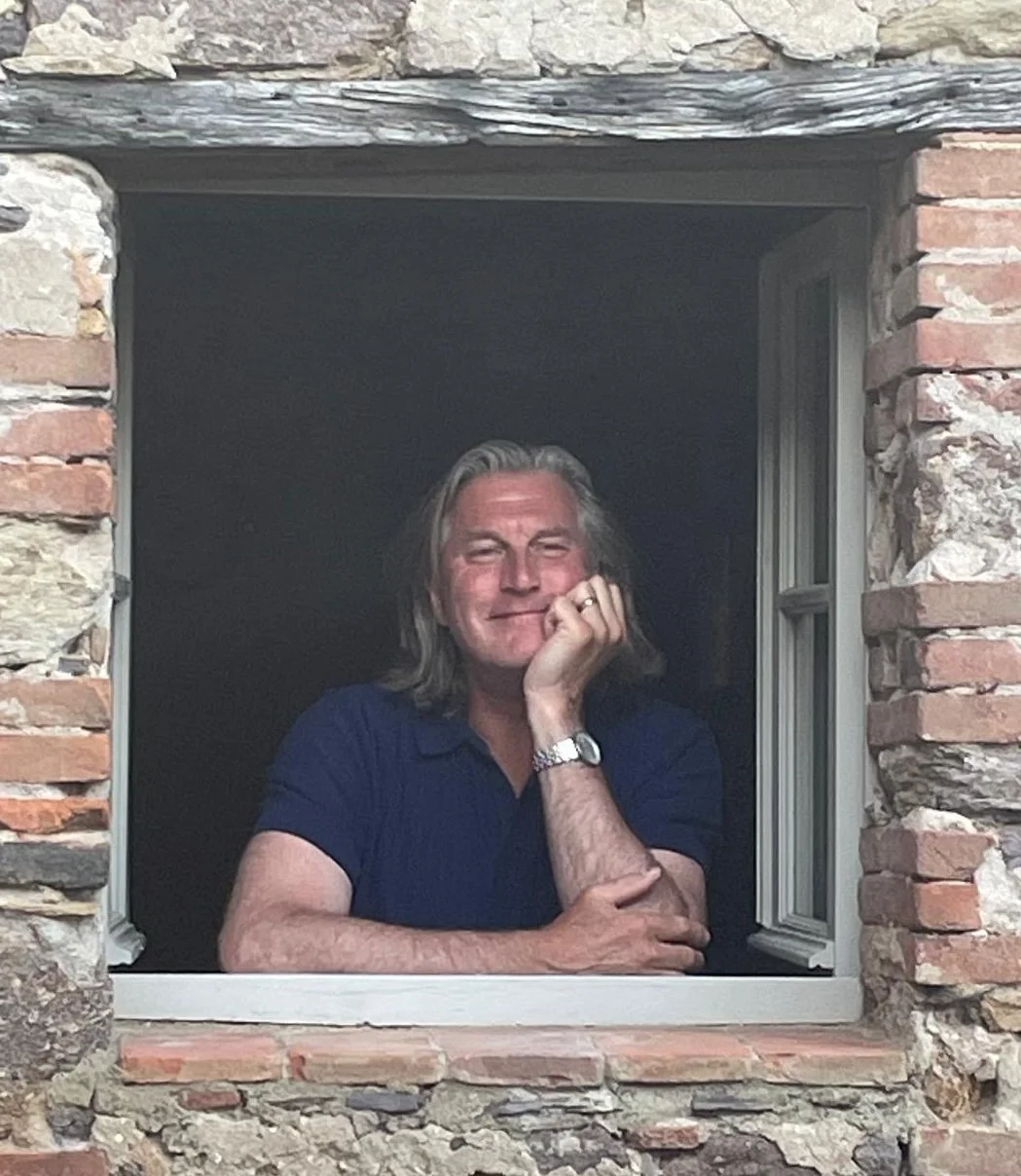
How I Got Here
In 1998, following a high-pressure international corporate career and the collapse of my own company, I had a suicidal breakdown. I did what most people do — I went into counselling. Eighteen months later, I was still stuck, completely disempowered and more dependent on my therapist than when I started.
So I did something different. Driven by curiosity and a burning need to understand what was actually happening inside my own head, I threw myself into the neurosciences. What I discovered fascinated me so completely that it became my life's work. I trained, I qualified, and in 2000 I set up as a therapeutic coach.
Since then I've worked with nearly 3,000 people — stressed-out executives, directors and entrepreneurs — helping them move through burnout, anxiety and depression, and the destructive coping mechanisms that come with them. I've written two books and several mini-books along the way.
And I've learned something meaningful from every single client. That's not a polite thing to say. It's why the work keeps getting better.
Why Traditional Therapy Often Falls Short
If you've tried therapy before and still feel stuck, it's not you. The model has real limitations worth understanding.
The traditional 50-minute session barely scratches the surface before time is up. Real breakthrough work — the kind that actually shifts something deep and carries back into daily life — takes two to three hours of focused, uninterrupted space.
There's also something most therapists never tell you. Your conscious mind makes up just 9% of your total mind. The other 91% is your unconscious — and that's where your patterns, beliefs and behaviours actually live. If you could simply think your way out of this, you already would have. The real work has to go deeper than talk.
And then there's the relationship itself. Even after 18 months in therapy, I knew absolutely nothing about my counsellor. Transformation doesn't happen in a cold, detached room. It happens in a relationship built on genuine trust — where sometimes the most powerful thing you can hear is "I've been there too."
I bring my own real experiences into the room. Always.


Taking The Work Further
The World Has Changed
More and more people are turning to their phones and screens first when they're looking for answers. That's not a problem to solve — it's an opportunity to meet people exactly where they are.
25 Years. One Place.
The Unbecoming Navigator app brings together everything built across 25 years of therapeutic coaching work — the frameworks, the insights, the understanding of how the mind actually creates your experience of reality — and makes it personal. Not a generic self-help programme. A guided, intelligent journey built around you and how your specific mind filter works.
Wisdom That Scales
The one-to-one work will always be powerful. But an app means that wisdom no longer stops at the edge of a consulting room. It reaches the person on the other side of the world at midnight, the one who isn't ready to talk to anyone yet but is finally ready to begin.
That's how one person's understanding becomes a movement.
Why Therapeutic Coaching Is Different
Your brain processes around two million bits of information every second. Your conscious mind handles between five and nine of them. Everything else is filtered and interpreted by your unconscious — automatically, before a single conscious thought has formed.
That filter is creating your entire experience of reality. What you believe you're worth. Who you think you are. It's been running since childhood, built from experiences you never chose — and for most people, it's been quietly running the show ever since.
The UNBECOMING Method works at the level of that system. Not at the surface of thoughts and behaviours, but at the source generating them. When you work there, everything shifts. Self-esteem becomes natural. Authenticity becomes effortless. Purpose comes into reach. And the kind of quiet, grounded confidence that draws people in emerges — because it was never something to manufacture. It was always there: it was just blocked.
The brain isn't fixed. What was learned can be relearned. And when those old programmes finally update, the real you steps forward — grounded, authentic, purposeful and quietly confident. The UNBECOMING Method doesn't just help you heal. It hands you back the authorship of your own life. The freedom and inner power to build one you have consciously chosen — and to thrive in it, fully and unapologetically.

Anglia News for World Mental Health Day
Walking My talk
The videos below are not about ego (definitely not!). They’re about being authentic and unguarded.